Nike has always been the undisputed king of visual shoe gimmicks. From the moment the Air Max 1 debuted in 1987 with its groundbreaking visible Air unit, the footwear industry was never the same.
That tiny window in the midsole didn’t just show cushioning—it told a story. It visually explained technology at a time when most sneakers were still simple canvas uppers with vulcanized rubber soles.
Fast forward to today, and Nike has pushed that same concept to the absolute extreme. One of the most controversial examples of this evolution is the Nike Mind Mule—a shoe that claims to stimulate the brain through pressure points on the foot, promising focus, presence, and even performance enhancement.
But is the Nike Mind Mule a genuine innovation, or is it just another overhyped visual gimmick wrapped in pseudoscientific marketing? In this in-depth Nike Mind Mule review, we break down the history, the technology claims, the real construction, how it feels underfoot, and whether Nike’s direction is helping or hurting the brand.
The Evolution of Nike’s Visual Technology
To understand the Nike Mind Mule, you have to understand Nike’s obsession with visual tech.
Before Nike’s Air revolution, most shoes looked the same:
- Simple materials
- Minimal cushioning
- Very little to differentiate brands visually
The Air Max 1 changed all of that. The visible Air unit was more than cushioning—it was communication. Consumers didn’t need to read tech specs; they could see innovation.
As material science exploded in the late ’80s and ’90s, Nike leaned heavily into this idea. Visual tech became their strongest weapon against competitors.
Why Visual Tech Worked So Well for Nike
Nike faced a real challenge in the early days of performance footwear: How do you explain complex technology to everyday consumers?
Naming tech, branding it, and describing it only went so far. But a visible element? That was instant understanding.
Visual tech allowed Nike to:
- Show difference instead of explaining it
- Create hype without deep technical knowledge
- Build emotional connections through design
And most importantly, it worked.
“Read Also: Nike Air Diamond Turf 2 Review”
From Performance Innovation to Casual Gimmicks
As Nike gradually shifted from being a pure performance brand to a lifestyle-first giant, something changed. Casual shoes didn’t need to perform at elite athletic levels. This gave Nike freedom to exaggerate visual tech:
- Full-length Air units
- Shox columns
- Massive foam geometries
- Overbuilt cushioning systems
By the late ’90s and early 2000s, Nike was experimenting aggressively. But in recent years, those experiments have gone further than ever before.
Nike’s Visual Tech in 2025: Pushing It Too Far?
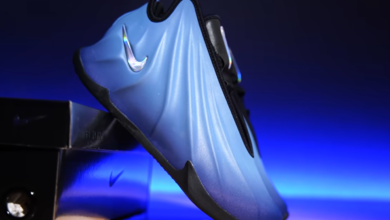
Today, Nike’s visual tech sometimes feels less like explanation and more like attention-grabbing spectacle. Shoes like the Air Max Scorpion and now the Nike Mind Mule don’t just showcase technology—they shout it. In many cases, these designs are:
- Difficult to wear casually
- Unstable underfoot
- Built more for shock value than function
This brings us to the core question: Is Nike innovating—or just creating clickbait sneakers?
What Is the Nike Mind Mule?
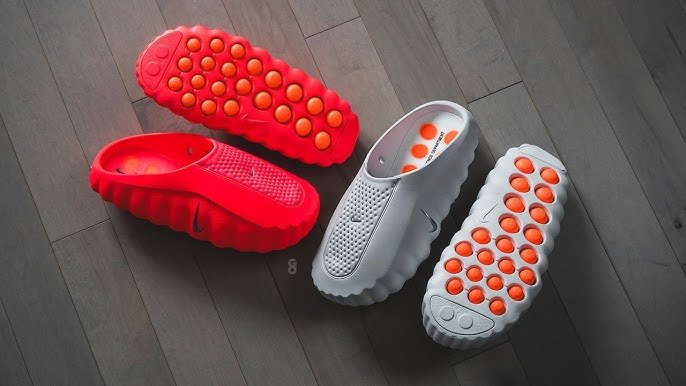
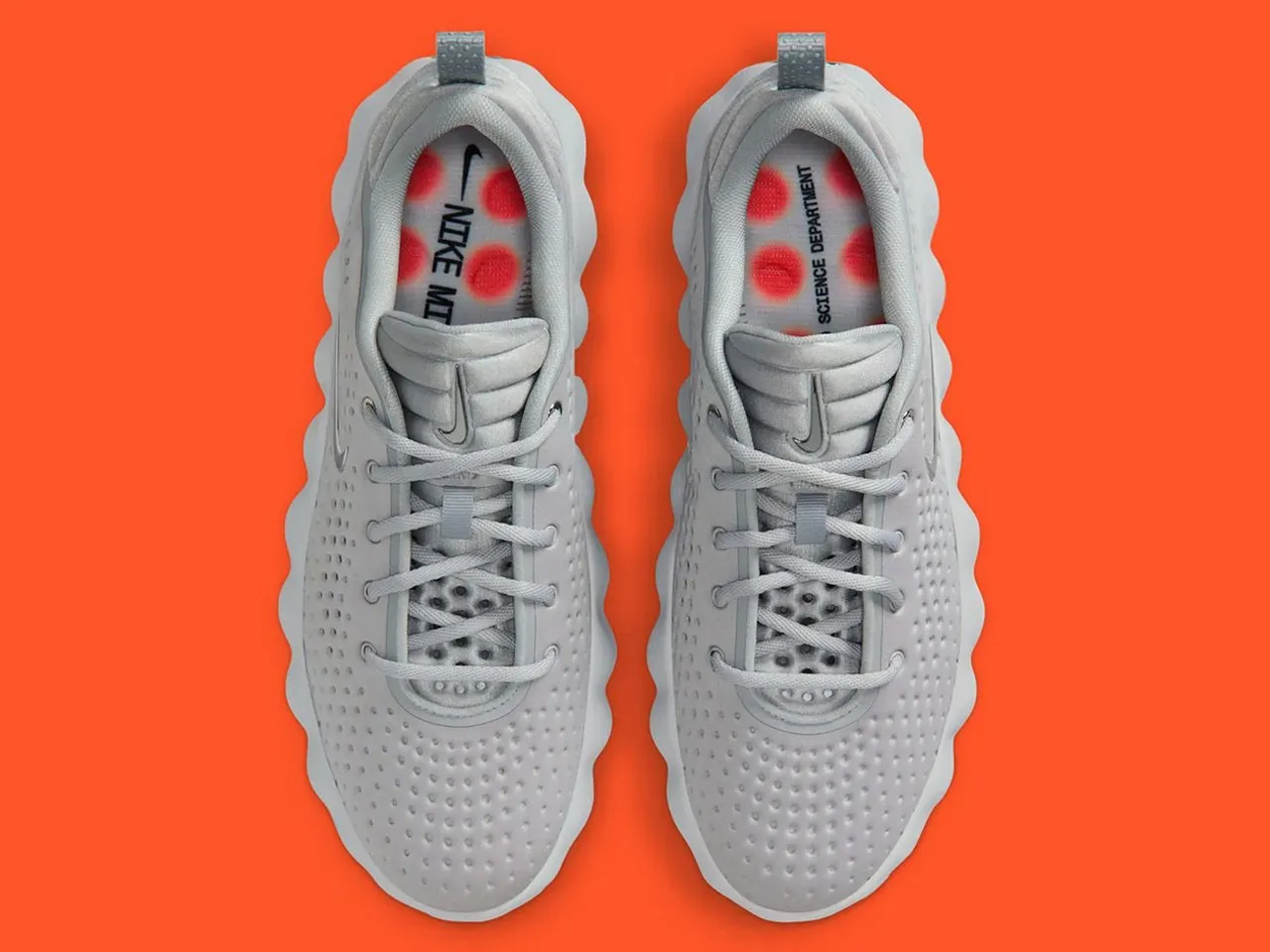
The Nike Mind Mule is a foam mule-style shoe that retails for $95, weighs approximately 10 oz, and is manufactured in Vietnam.
At face value, that price feels steep for a foam mule—unless the technology actually delivers something meaningful. Nike’s positioning of this shoe is where controversy begins.
“Read Also: Nike GT Cut 4 Review: A Promising Concept Ruined by Poor Fit and Materials“
Nike’s Claims About the Nike Mind Mule
Nike describes the Mind Mule as a “mind-altering shoe”, developed by its so-called Mind Science Department.
According to Nike, the shoe:
- Uses 22 articulated nodes in the outsole
- Applies pressure to anatomically mapped points on the foot
- Activates sensory areas of the brain
- Helps athletes feel focused, calm, and present
On paper, it sounds impressive. In reality, it raises serious red flags.
The Problem With Nike Mind Technology Claims
This is where the Nike Mind Mule review takes a sharp turn. Nike carefully avoids making explicit medical or performance claims, but strongly implies benefits:
- Improved focus
- Enhanced mindset
- Better pregame preparation
The issue is simple: There is no publicly available scientific data supporting these claims. Nike leans heavily on vague neuroscience language without publishing:
- Peer-reviewed studies
- Measurable results
- Clear before-and-after data
Instead, the messaging repeats the same talking points across:
- Product listings
- Marketing pages
- Advertisements
That repetition isn’t confidence—it’s legal caution.
“Read Also: Nike GT Future Review“
Is the Nike Mind Mule Pseudoscience?
From a critical perspective, the Nike Mind Mule sits uncomfortably close to pseudoscience.
Here’s why:
- Any physical stimulus on the foot sends signals to the brain—that’s basic biology
- That doesn’t mean it improves performance or mindset
- Pressure ≠ neurological enhancement
By this logic, pinching your foot or wearing a tight bracelet would also be “mind-altering.” Nike knows this. That’s why their language is intentionally vague. They imply benefits without claiming anything concrete enough to be legally challenged.
Cutting the Nike Mind Mule in Half: What’s Inside?
When the Nike Mind Mule is physically cut open, the truth becomes very clear.
Internal Construction
- No hidden chambers
- No mechanical systems
- No advanced internal structures
The shoe is extremely simple.
The 22 Nodes Explained
The nodes are:
- Made of foam
- Glued onto the insole
- Different sizes, but same material
They protrude slightly, pushing upward when pressure is applied. That’s it. No sensors. No special materials. No embedded technology.
Are the Nike Mind Mule Nodes Durable?
The nodes are glued on fairly securely, but they can be pulled off with enough force.
Will they fall off during normal wear?
- Probably not immediately
- But long-term durability is questionable
This concern becomes much more serious when considering the sneaker version of Nike Mind technology, where performance expectations are higher.
How the Nike Mind Mule Feels Underfoot
Walking in the Nike Mind Mule is… strange.
On-Foot Experience
- You feel mild pressure on the bottom of your foot
- The nodes shift slightly with each step
- The sensation is unstable and sloppy
Rather than grounding you, the shoe feels like walking on small rolling bumps—almost like walking on ice.
It’s not painful.
It’s not intense.
But it’s also not particularly beneficial.
Does the Nike Mind Mule Improve Focus or Performance?
Based on real-world experience: No.
Any perceived mental effect comes from novelty, not technology. The sensation briefly pulls your attention into your body—but so would:
- Cold water
- A pinch
- Textured insoles
There’s no evidence that the Nike Mind Mule does anything beyond basic sensory stimulation.
Are Gimmicks Bad for Nike?
This is where the discussion gets nuanced.
Gimmicks themselves aren’t bad. In fact, gimmicks:
- Built Nike’s identity
- Made sneakers exciting
- Pushed design boundaries
The problem starts when gimmicks are paired with misleading narratives. When Nike frames a novelty as science-backed performance enhancement without proof, trust erodes.
Is Nike Ruining Consumer Trust?
Nike’s brand power comes from trust. Consumers believe:
- Nike innovation is real
- Nike performance claims are grounded
- Nike doesn’t exaggerate without reason
When marketing crosses into pseudoscience—even subtly—it risks long-term damage. The Nike Mind Mule doesn’t just feel unnecessary; it feels dishonest.
Nike Mind Mule: Price vs Value
At $95, the Nike Mind Mule is priced well above similar foam footwear like Crocs. Without real technological value:
- The price feels unjustified
- The marketing feels manipulative
If Nike had positioned this as:
“A fun sensory shoe with a unique feel”
there would be far less backlash.
Frequently Asked Questions About the Nike Mind Mule
What is the Nike Mind Mule?
The Nike Mind Mule is a foam mule featuring 22 protruding nodes designed to stimulate the foot and create a sensory experience.
Does the Nike Mind Mule improve focus or performance?
There is no published scientific evidence proving that it improves focus, performance, or mental clarity.
Is Nike Mind technology scientifically proven?
Nike has not released any peer-reviewed studies or measurable data to support its claims.
Is the Nike Mind Mule comfortable?
It feels unusual rather than uncomfortable, but the instability may not suit extended walking.
Is the Nike Mind Mule worth buying?
If you’re curious about novelty footwear, maybe. If you expect real benefits, probably not.
Conclusion: Nike Mind Mule as a Turning Point
The Nike Mind Mule represents a troubling direction for Nike. Not because it’s weird, but because it’s framed as something it’s not. Visual gimmicks helped build Nike—but when gimmicks become disguised as science, the line gets crossed.
Nike doesn’t need pseudoscience to sell shoes. Its legacy is strong enough without it.
Until real data is published, the Nike Mind Mule remains what it appears to be:
A flashy gimmick wrapped in scientific-sounding marketing—without the science.

بصفتي مراجعًا متخصصًا في الأحذية الرياضية، أمضيت سنوات في تحليل واختبار الأحذية الرياضية بمختلف فئاتها، بدءًا من أحذية الجري عالية الأداء وصولًا إلى أحذية كرة السلة العصرية. يتجاوز عملي مجرد الانطباعات الأولى؛ فكل مراجعة مبنية على خبرة عملية، وبحث دقيق، واهتمام بالتفاصيل التي تهم الرياضيين ومستخدمي الأحذية على حد سواء. أهدف إلى سد الفجوة بين ادعاءات العلامات التجارية التسويقية والأداء الفعلي، مانحًا القراء رؤية صادقة ومتوازنة.
يجمع أسلوب كتابتي بين التقييم التقني والأسلوب السلس، مما يُمكّن المحترفين والهواة على حدٍ سواء من فهم نقاط القوة والضعف في كل حذاء. سواءً أكان الحديث عن تقنية التوسيد في النعل الأوسط، أو ثبات النعل الخارجي، أو تهوية الجزء العلوي، فإنني أُبسّط الميزات المعقدة إلى معلومات عملية. يثق القراء بمراجعاتي لأنهم يعلمون أنني أُسلّط الضوء على المزايا والعيوب المحتملة، مما يُساعدهم على اتخاذ قرارات شراء أكثر ثقة.
بمرور الوقت، تطور عملي ليصبح مرجعًا شاملًا لكل من يبحث عن إرشادات حول الأحذية الرياضية. أقارن بانتظام الإصدارات الجديدة بالنماذج السابقة لتسليط الضوء على التحسينات أو الفرص الضائعة، مع استكشاف مدى ملاءمة الأحذية المختلفة لأنشطة محددة، مثل التدريب على الماراثون، ورفع الأثقال، أو حتى الملابس الرياضية اليومية. من خلال مواكبة أحدث اتجاهات الصناعة والاستماع إلى آراء المستخدمين، أضمن أن تظل مراجعاتي ذات صلة ومفيدة وغنية بالمعلومات.
في نهاية المطاف، تتمثل مهمتي في توفير الوضوح في سوق مزدحم. مع وجود خيارات لا حصر لها، قد يبدو اختيار الحذاء المناسب أمرًا محيرًا. من خلال مراجعات متعمقة وموضوعية وجذابة، أسعى جاهدًا لتسهيل هذا القرار، وتزويد القراء بالمعرفة التي يحتاجونها للعثور على حذاء يُلبي أهدافهم الرياضية وأسلوبهم الشخصي.