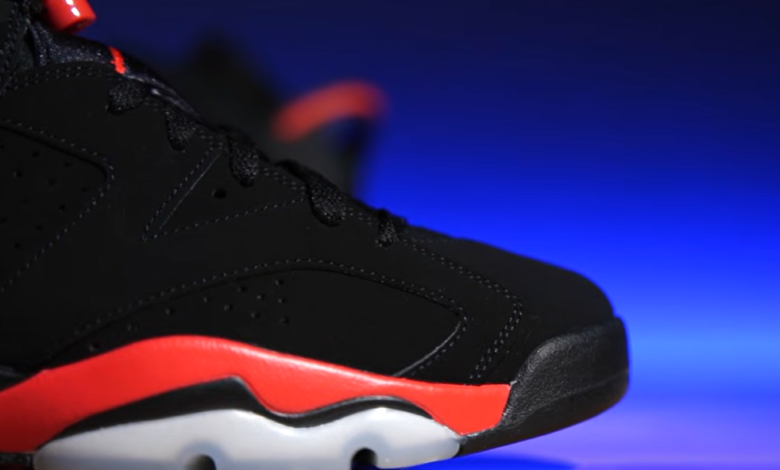
The Air Jordan 6 Reverse Infrared is more than just another retro sneaker — it’s a storytelling masterpiece that connects longtime Jordan fans with a forgotten piece of sneaker history. While many know the classic Black/Infrared Air Jordan 6 as Michael Jordan’s first championship shoe, fewer people are familiar with the mysterious sample version that never officially released back in 2000.
Table of Contents
This modern release brings that story to life, blending nostalgia, design history, and clever packaging into one of the most interesting Jordan retros in years. Whether you’re an OG sneakerhead or a newcomer trying to understand the hype, this pair offers a rare look into the behind-the-scenes world of Jordan Brand samples and production errors.
Let’s break down what makes the Air Jordan 6 Reverse Infrared so special.
The Origin of the Air Jordan 6 Reverse Infrared
To understand this release, we need to go back to the year 2000.
Jordan Brand was preparing to retro the Black/Infrared Air Jordan 6 for the first time. Anticipation was huge. This was the shoe Michael Jordan wore during his first NBA championship in 1991 — a certified classic.
But when early catalog and promo images surfaced, fans noticed something strange.
Instead of the expected black upper with infrared accents, the sample pair appeared flipped — with infrared (or “light crimson”) used more heavily than expected. It looked like a factory mix-up, and sneaker fans at the time were not happy.
Ultimately, the correct version released, and the odd sample faded into legend.
Fast forward to today, and Jordan Brand has officially brought that forgotten mistake to life in the form of the Air Jordan 6 Reverse Infrared.
Why It’s Called “Reverse Infrared” (But Isn’t)
One of the most amusing details about this sneaker is the naming confusion. While most fans call it the Reverse Infrared, the official box label reads “Black/Light Crimson.” The word “infrared” doesn’t even appear — despite the obvious visual connection to the original colorway.
This subtle difference is intentional. It reinforces the idea that this shoe represents a sample or production variation, not a true Infrared retro. It’s a nod to sneaker nerd culture and to those who remember the early 2000s catalog mix-up.
Storytelling Through the Packaging
Jordan Brand didn’t just release a colorway — they told a story from the moment you open the box.
Plain Sample-Style Box
Instead of the usual Jordan retro packaging, the Air Jordan 6 Reverse Infrared comes in a plain cardboard box. This mirrors how salesman samples and promo samples are often packaged.
Sample pairs frequently come in unbranded boxes with simple labels listing production details. By recreating this look, Jordan Brand places the shoe within the world of internal samples rather than retail products.
Sample Tags and Internal Markings
The storytelling continues inside the shoe. The pair includes sample-style labeling and interior markings similar to what was commonly seen on Nike and Jordan samples in the late ‘90s and early 2000s.
Many authentic samples from that era featured bold internal stamps reading “Property of Nike” or “Not for Resale.” This release captures that aesthetic, adding credibility to the idea that this sneaker represents a piece of Jordan Brand’s design archive.
For longtime collectors, these details are a love letter to sneaker history.
Design Differences from the Original Infrared 6
At first glance, the Air Jordan 6 Reverse Infrared looks familiar. But side-by-side with a traditional Black/Infrared pair, the differences become clear.
Upper Color Blocking
The biggest change is the reversed use of infrared accents. Instead of subtle hits, the crimson tone becomes a much stronger visual element.
This gives the shoe a bolder, more modern look while still staying rooted in the DNA of the original design.
Heel Panel Texture
One standout detail is the back heel panel, which appears to have a slightly different finish from the rest of the upper.
A Nod to the 1991 Original Construction
On the original 1991 Air Jordan 6, the molded heel area often looked slightly shinier or more “leather-like” due to the heat used during the shaping process. That heat subtly altered the texture of the material.
The Reverse Infrared recreates this visual effect, making the heel area look distinct even though it uses the same synthetic nubuck base. It’s a small but meaningful nod to OG production quirks.
Missing Reflective Underlays
Traditional Infrared 6 retros often feature 3M reflective material beneath the perforations. On this pair, that detail is absent.
This omission further supports the idea that the shoe represents an early sample or alternate version rather than a finalized retail design.
Extended Tongue Height
Jordan Brand also stated that the tongue was extended by 2 millimeters to better match Michael Jordan’s original game-worn pairs from 1991.
While this difference is subtle and difficult to notice visually, it highlights the brand’s ongoing effort to refine retro accuracy.
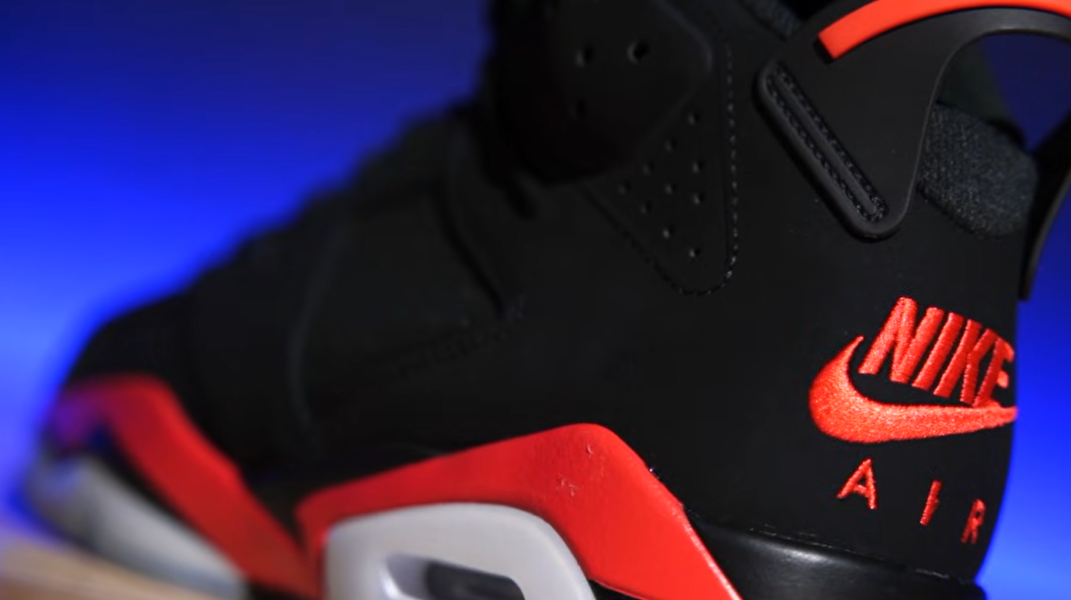
Bold Nike Air Branding
One of the most eye-catching features is the large, colored Nike Air branding on the heel.
Unlike many original colorways where the heel branding blended into the upper, this version uses strong contrast. The result is a heel that feels more modern and visually striking.
For many fans, this is one of the best aesthetic updates on the shoe.
Materials and Build
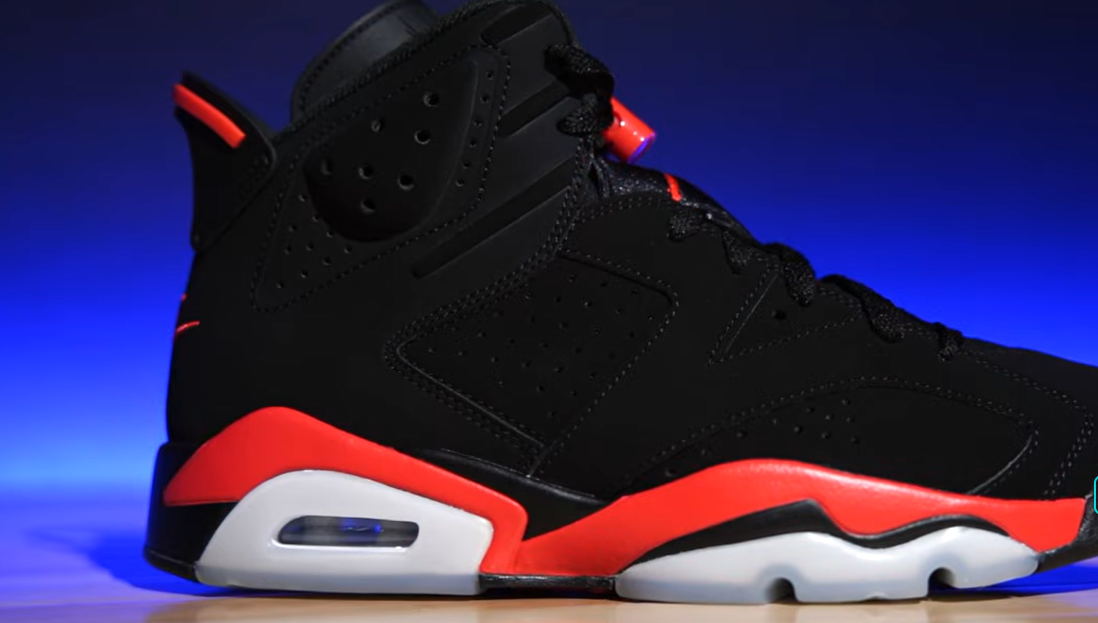
Like most modern Air Jordan 6 retros, the Reverse Infrared uses synthetic nubuck rather than genuine durabuck or leather.
Upper Construction
The original Air Jordan 6 used a material called Durabuck, a durable synthetic nubuck alternative that is no longer produced today. Modern retros replicate the look using updated synthetic materials. This keeps the appearance consistent with the OG while meeting current manufacturing standards.
Midsole and Cushioning
The midsole is made of polyurethane, housing:
- An encapsulated Air unit in the forefoot
- A visible Air unit in the heel
This setup is standard for the Air Jordan 6 and offers classic Jordan-era cushioning — firm, stable, and supportive.
Outsole Details
The outsole mirrors the traditional Infrared 6 layout:
- Mostly black rubber traction
- Translucent sections
- Crimson Jumpman branding
The translucent rubber has a slight blue tint, which may change over time with wear and oxidation.
“Read Also: My In-Depth Look at the Air Jordan 5 Fire Red 2025:“
Fit and Sizing of the Air Jordan 6 Reverse Infrared
For most people, the Air Jordan 6 Reverse Infrared fits true to size.
The interior uses a neoprene sleeve, which creates a snug, sock-like feel around the foot. However, the shoe does not have excessive padding, so those with narrow feet may find it slightly roomy and could consider going down half a size.
For average and wider feet, sticking with your normal size is typically the best choice.
Why This Release Matters to Sneaker Culture
This shoe isn’t just about looks — it represents a shift in how Jordan Brand approaches retros.
Instead of simply re-releasing classics, the brand is now:
- Exploring archival samples
- Celebrating design mistakes
- Highlighting production history
For longtime fans, this validates years of interest in sample pairs, promo stories, and behind-the-scenes sneaker lore. For newer fans, it’s an education in how sneaker culture evolved before social media leaks and instant drops.
The Air Jordan 6 Reverse Infrared bridges generations of sneaker enthusiasts.
The Business of Sneaker Molds and Production
One interesting discussion surrounding retros like this involves why brands don’t simply reuse original molds.
In reality, major brands like Nike often do not own the factories that produce their shoes. Factories create molds to fulfill production contracts, and once the production run ends, those molds remain with the factory.
Over time, molds can be:
- Destroyed
- Recycled
- Repurposed
This is one reason retro shapes can vary across decades and why recreating exact OG builds is so challenging.
“Read Also: Jordan Trunner O/S Review“
Frequently Asked Questions About the Air Jordan 6 Reverse Infrared
1. What is the Air Jordan 6 Reverse Infrared?
It’s a modern Jordan Brand release inspired by a sample version of the Air Jordan 6 that surfaced around the year 2000 with reversed Infrared-style color blocking.
2. Why isn’t it officially called Infrared?
The box label uses “Black/Light Crimson” instead of Infrared to reflect its status as a variation rather than a true retro of the original colorway.
3. Does the Reverse Infrared have 3M reflective panels?
No, unlike many traditional Infrared 6 releases, this pair does not feature reflective underlays behind the perforations.
4. Is the Nike Air on the heel accurate to the original?
The Nike Air branding is larger and more colorful than many original pairs, giving it a bold, modernized look.
5. How does the Air Jordan 6 Reverse Infrared fit?
Most people can go true to size. Narrow-footed wearers may consider going down half a size for a snugger fit.
“Read Also: Air Jordan 5 PSG Off Noir“
Final Thoughts on the Air Jordan 6 Reverse Infrared
The Air Jordan 6 Reverse Infrared stands out because it does more than revive a classic silhouette — it revives a forgotten story. By leaning into sample culture, production history, and design quirks, Jordan Brand delivered a release that feels meaningful rather than routine.
For OG fans, it’s a long-awaited acknowledgment of a legendary “what if” moment in sneaker history. For newer collectors, it’s a lesson in how deep the rabbit hole of sneaker storytelling really goes.
And that combination of history, detail, and thoughtful design is exactly what keeps sneaker culture alive.

بصفتي مراجعًا متخصصًا في الأحذية الرياضية، أمضيت سنوات في تحليل واختبار الأحذية الرياضية بمختلف فئاتها، بدءًا من أحذية الجري عالية الأداء وصولًا إلى أحذية كرة السلة العصرية. يتجاوز عملي مجرد الانطباعات الأولى؛ فكل مراجعة مبنية على خبرة عملية، وبحث دقيق، واهتمام بالتفاصيل التي تهم الرياضيين ومستخدمي الأحذية على حد سواء. أهدف إلى سد الفجوة بين ادعاءات العلامات التجارية التسويقية والأداء الفعلي، مانحًا القراء رؤية صادقة ومتوازنة.
يجمع أسلوب كتابتي بين التقييم التقني والأسلوب السلس، مما يُمكّن المحترفين والهواة على حدٍ سواء من فهم نقاط القوة والضعف في كل حذاء. سواءً أكان الحديث عن تقنية التوسيد في النعل الأوسط، أو ثبات النعل الخارجي، أو تهوية الجزء العلوي، فإنني أُبسّط الميزات المعقدة إلى معلومات عملية. يثق القراء بمراجعاتي لأنهم يعلمون أنني أُسلّط الضوء على المزايا والعيوب المحتملة، مما يُساعدهم على اتخاذ قرارات شراء أكثر ثقة.
بمرور الوقت، تطور عملي ليصبح مرجعًا شاملًا لكل من يبحث عن إرشادات حول الأحذية الرياضية. أقارن بانتظام الإصدارات الجديدة بالنماذج السابقة لتسليط الضوء على التحسينات أو الفرص الضائعة، مع استكشاف مدى ملاءمة الأحذية المختلفة لأنشطة محددة، مثل التدريب على الماراثون، ورفع الأثقال، أو حتى الملابس الرياضية اليومية. من خلال مواكبة أحدث اتجاهات الصناعة والاستماع إلى آراء المستخدمين، أضمن أن تظل مراجعاتي ذات صلة ومفيدة وغنية بالمعلومات.
في نهاية المطاف، تتمثل مهمتي في توفير الوضوح في سوق مزدحم. مع وجود خيارات لا حصر لها، قد يبدو اختيار الحذاء المناسب أمرًا محيرًا. من خلال مراجعات متعمقة وموضوعية وجذابة، أسعى جاهدًا لتسهيل هذا القرار، وتزويد القراء بالمعرفة التي يحتاجونها للعثور على حذاء يُلبي أهدافهم الرياضية وأسلوبهم الشخصي.